

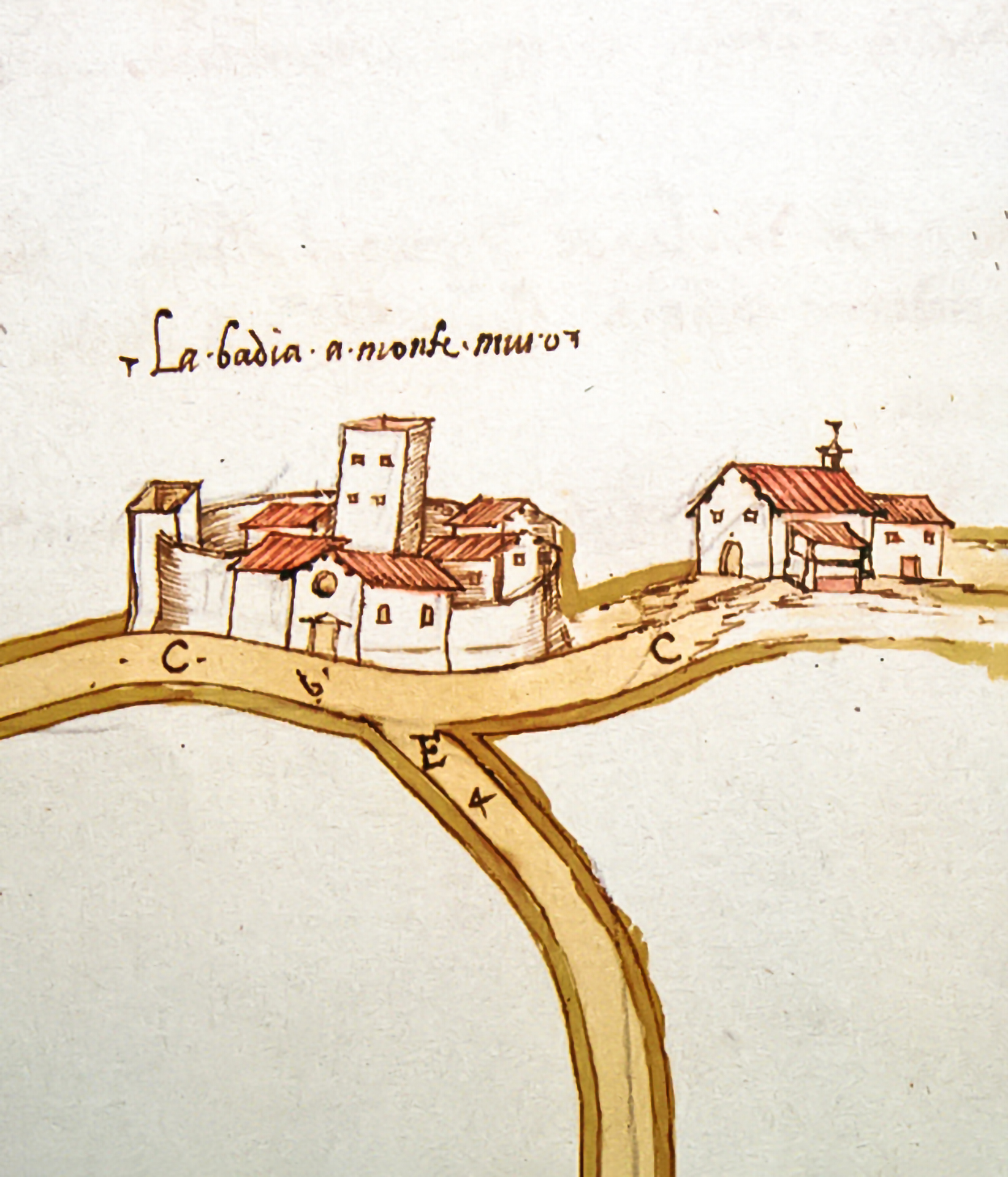
Ci troviamo in Toscana, nella celebre area geografica del Chianti Classico, che si sviluppa tra le province di Firenze e Siena. La località di Badia a Montemuro, oggi situata nel comune di Radda in Chianti, vede i suoi primi insediamenti intorno alla seconda metà dell’anno 1000, con la nascita di due monasteri dedicati a S. Michele e a S. Pietro. Da quest’ultimo nasce l’Abbazia di S. Pietro, consacrata nel 1058, dove si insediarono i monaci camaldolesi.
Tra il Trecento e il Cinquecento il borgo acquisisce una certa importanza strategica, dovuta anche alla posizione geografica dominante (ci troviamo a 700 m s.l.m). La frazione de La Badia diviene così suo malgrado teatro di numerosi conflitti armati, in seguito ai quali viene soprannominata “La Badiaccia”, per lo stato di abbandono architettonico in cui versava.
Successivamente al definitivo scioglimento dei monasteri nel 1616, la presenza de La Badia nei testi storici si riduce, facendo spazio a un quieto sviluppo residenziale. Oggi Badia a Montemuro è considerata uno dei borghi più pittoreschi del Chianti, oltre ad essere nota per la ricca biodiversità dei boschi presenti nei dintorni.
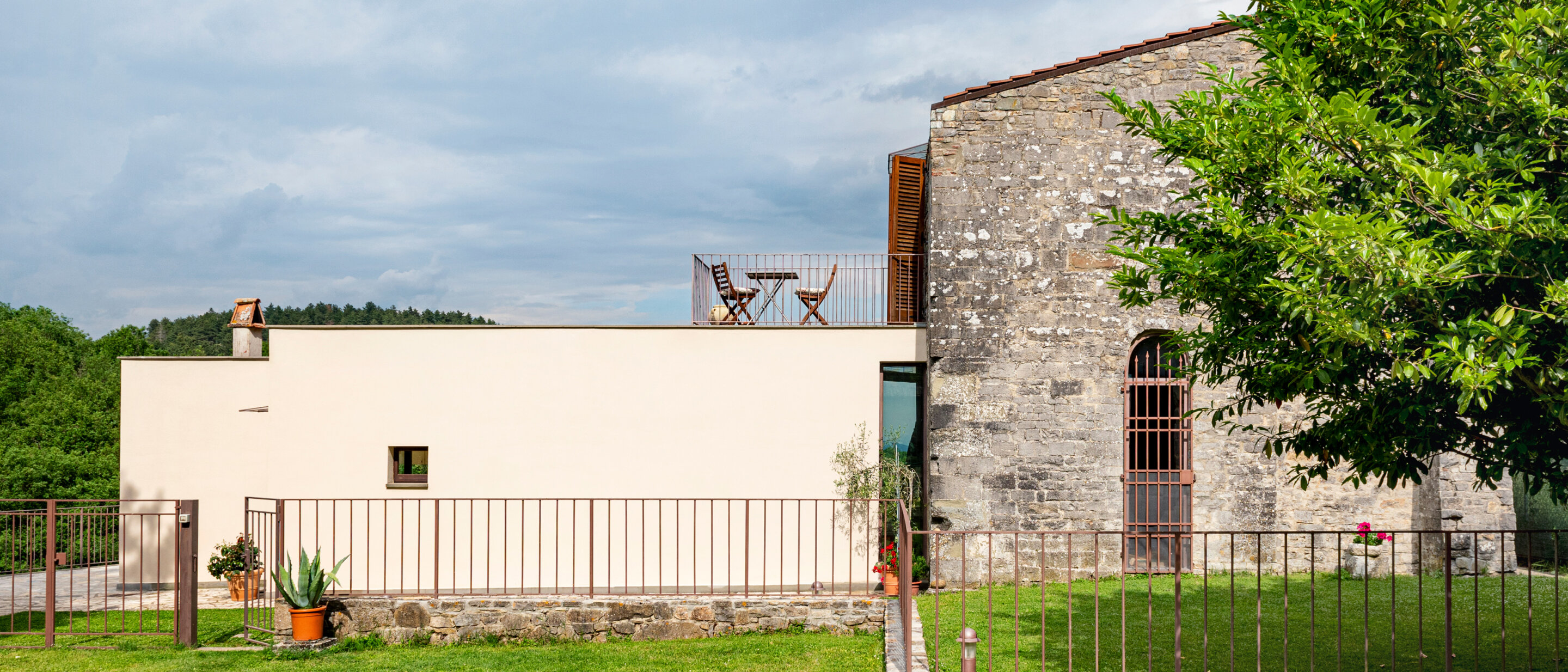
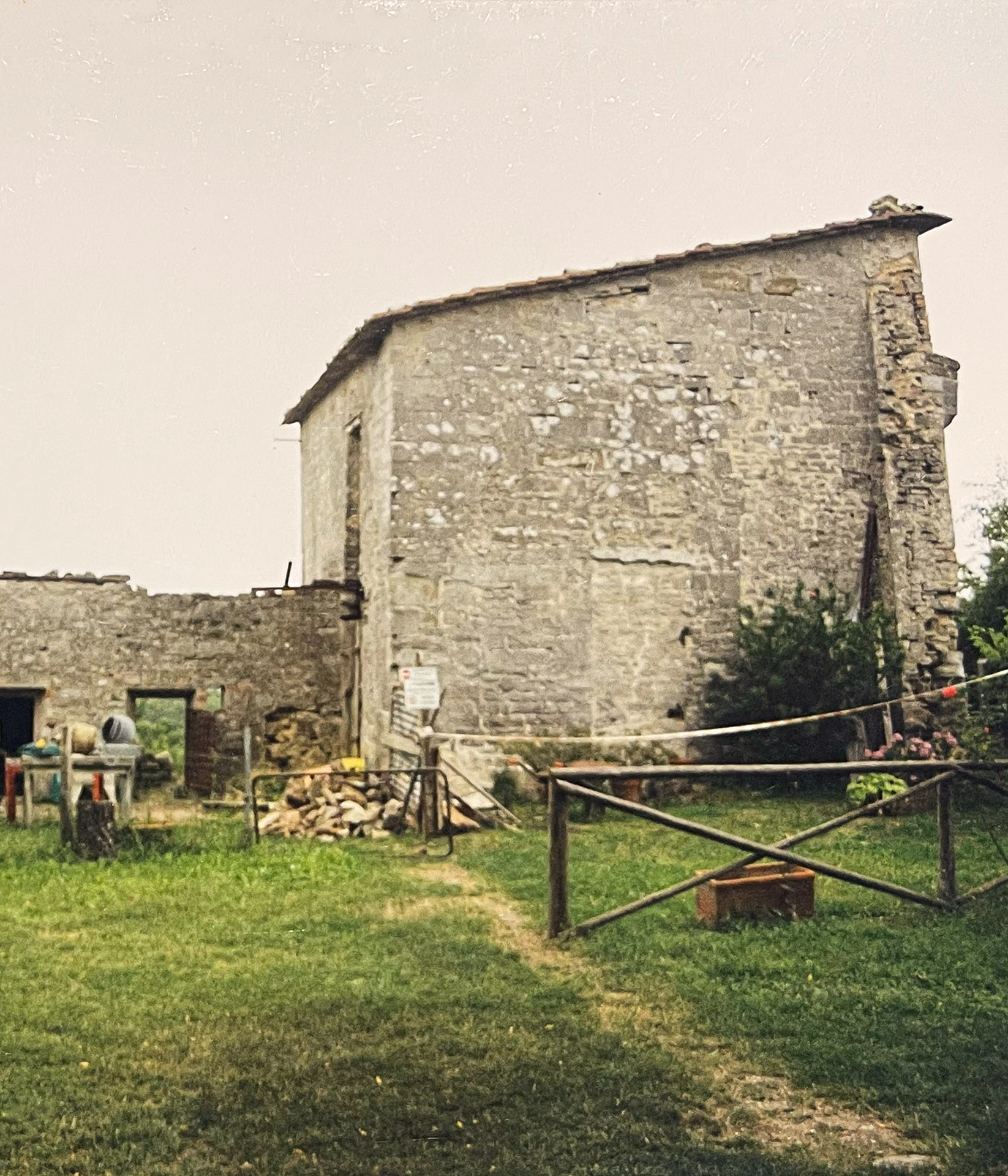
I volumi che compongono la Casa trovano spazio in ciò che una volta era il braccio sinistro del transetto dell’abbazia di S. Pietro, insieme ad alcuni fabbricati connessi all’antico monastero. La genesi del progetto di ristrutturazione risale al 2000, anno in cui la Famiglia Ghelardi decide di dare nuovo splendore alle rovine, con l’obiettivo di creare un immobile dal carattere originali, che coniughi la funzione di documentazione storica al comfort di un ambiente contemporaneo. Viene incaricato del progetto architettonico l’Arch. Riccardo Butini, che accompagna la famiglia in un lungo percorso progettuale e amministrativo.
I lavori per il restauro e l’ampliamento dei ruderi hanno inizio nel 2003 e vedono l’impiego di maestranze specializzate e tecniche di costruzione moderna, che hanno permesso di giungere al risultato che si percepisce oggi facendo ingresso nella Casa: uno spazio denso di storia, dal sapore autentico e raffinato, nato per trasmettere un senso di pace agli ospiti che lo abitano. Valori che probabilmente il medesimo spazio incarnava 950 anni prima per gli avventori dell’epoca.
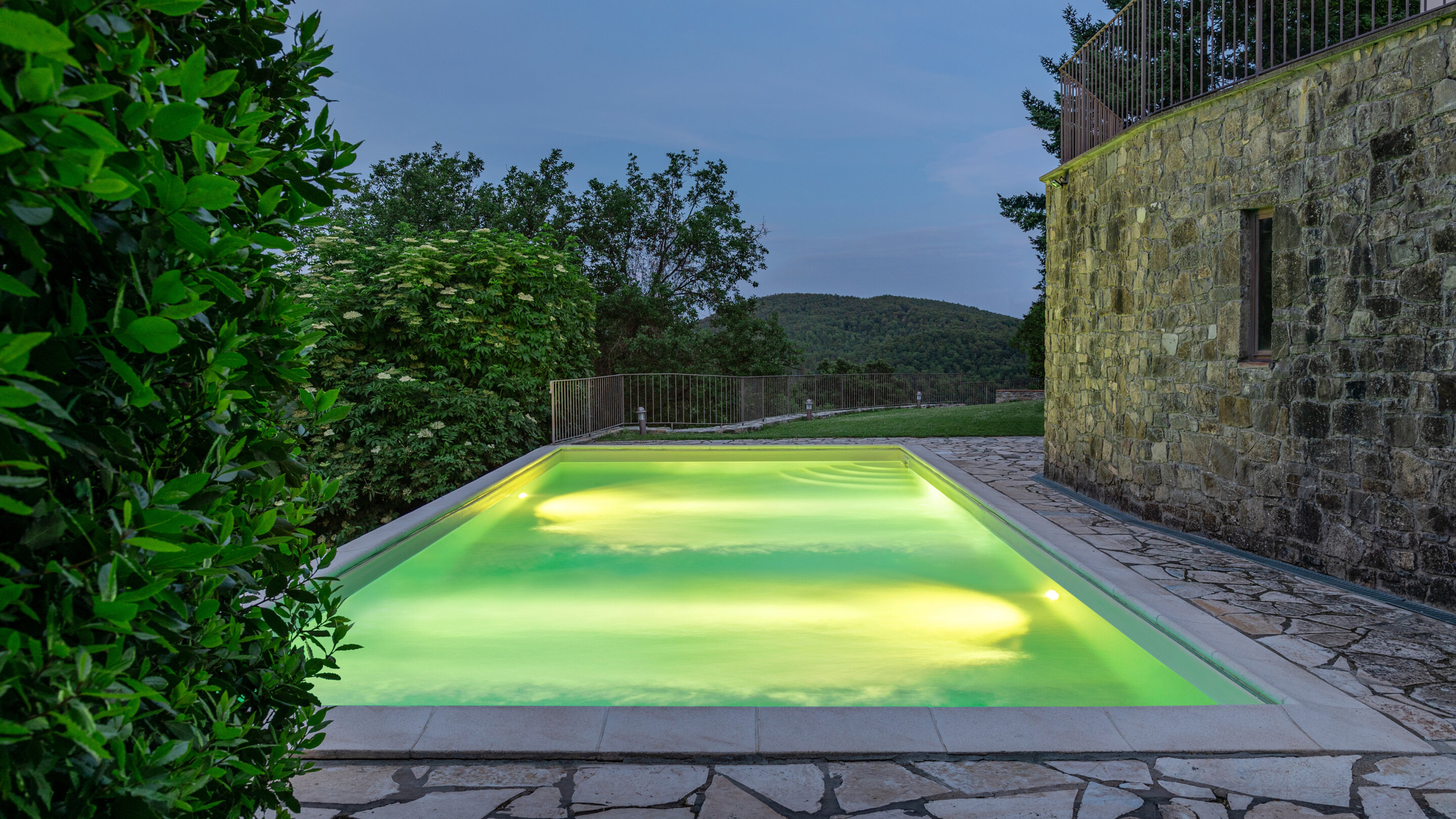
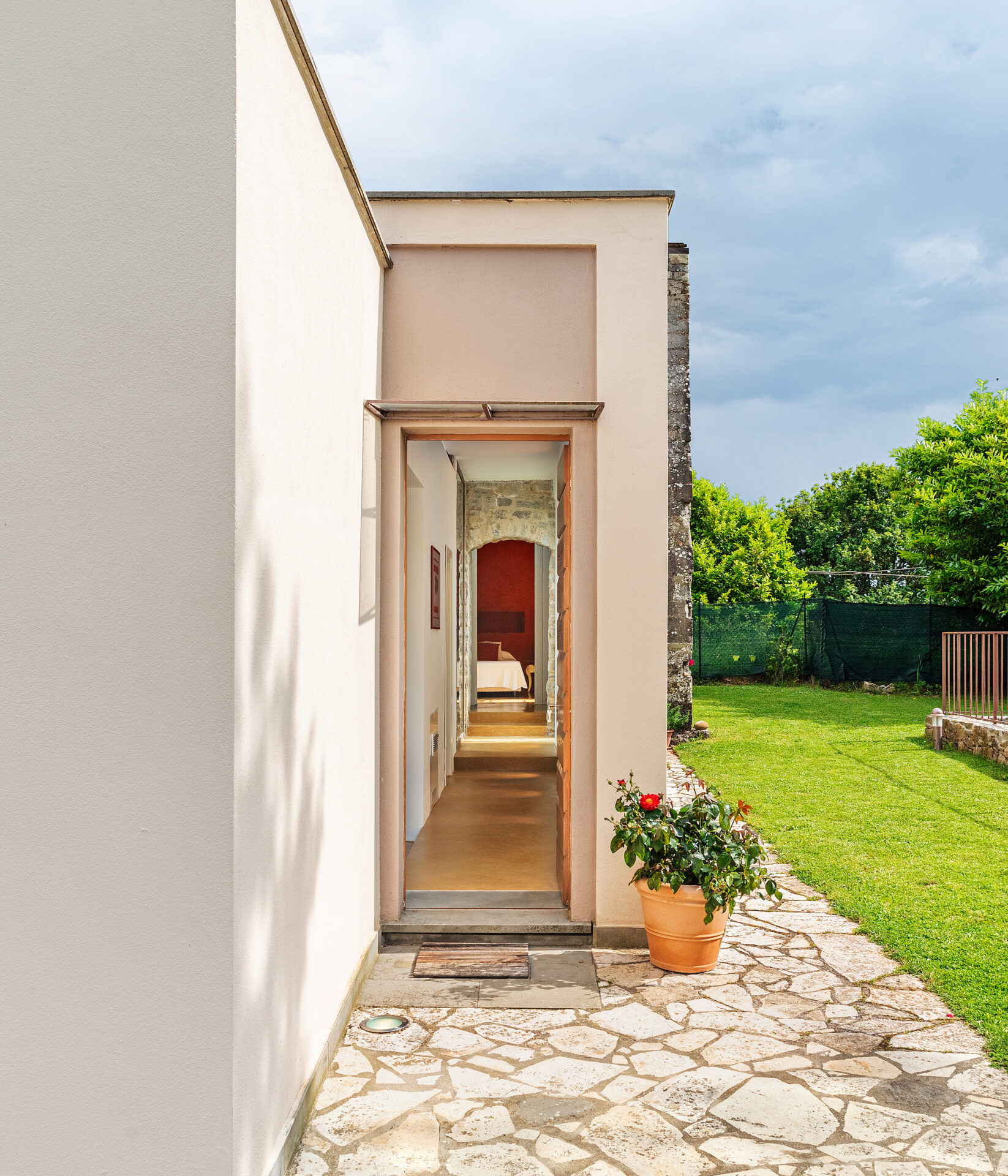
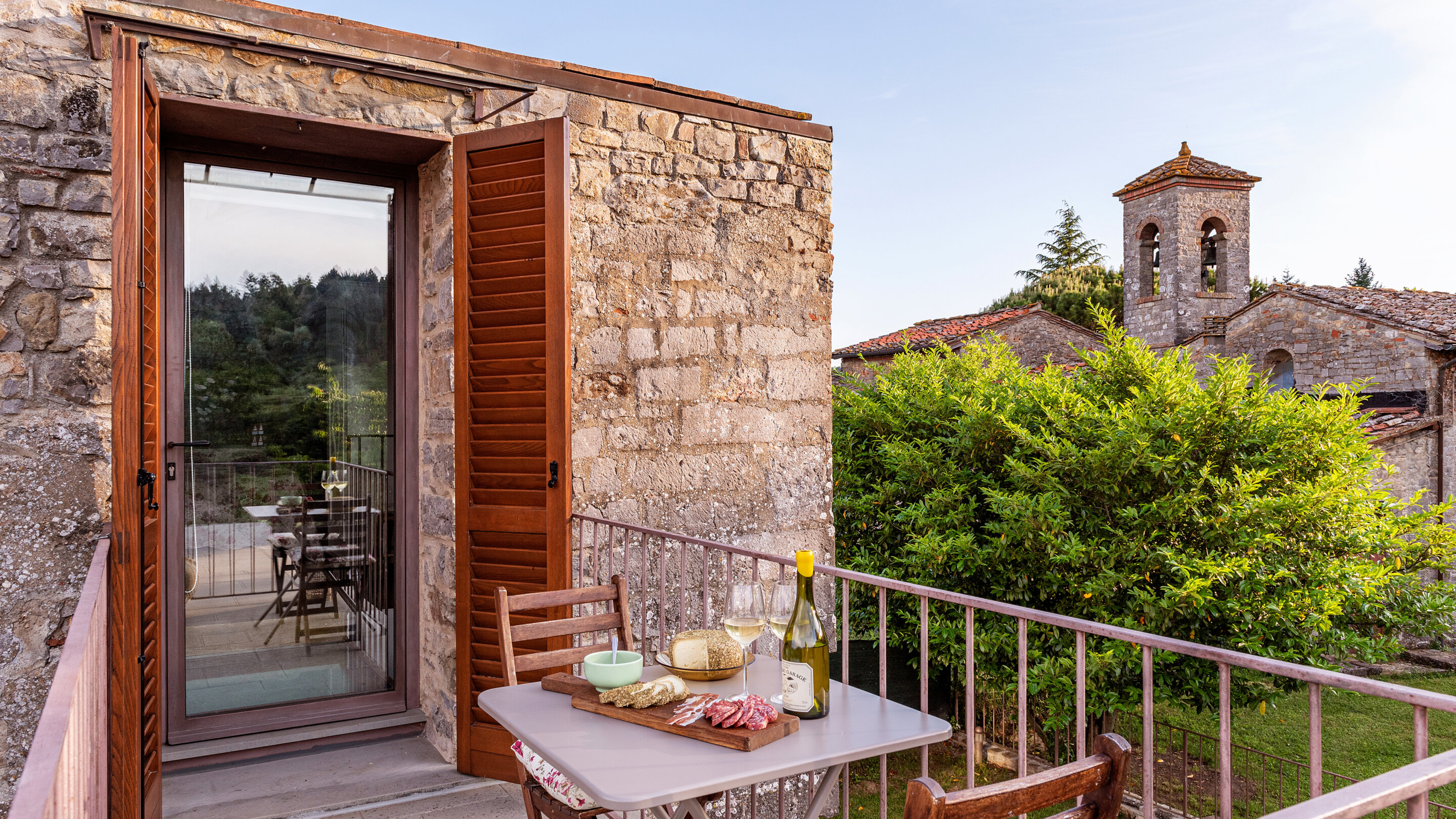
Oggi L’Abbazia è una struttura ricettiva moderna, esclusiva e adatta a un vasto pubblico di viaggiatori. La Famiglia Ghelardi si occupa tutt’oggi della gestione, che è svolta in prima persona secondo i principi di attenzione, discrezione e cordialità. La Casa dispone di 2 camere matrimoniali con bagno privato e può ospitare un massimo di 4 persone. È dotata di cucina con camino a legna, terrazza, piscina, giardino privato, barbecue, connessione internet veloce e posto auto.
L’Abbazia è uno spazio architettonico unico nel suo genere, come testimoniano numerose menzioni all’interno di vari premi dedicati all’architettura. Camminando all’interno della casa è possibile leggere sui suoi muri una storia antica e affascinante, e approfittare allo stesso tempo di ambienti e dotazioni di grande comfort ed esclusività. Un luogo dove chiunque – singolo, coppia o famiglia – può trovare la sua pace al riparo dalla frenesia moderna.
We are located in Tuscany, in the famous geographical area of Chianti Classico, which develops between the provinces of Florence and Siena. The locality of Badia a Montemuro, now included in the municipality of Radda in Chianti, sees its first settlements around the second half of the year 1000, with the birth of two monasteries dedicated to S. Michele and S. Pietro. From the latter was born the Abbey of S. Pietro, consecrated in 1058, where the Camaldolese monks settled.
Between the fourteenth and sixteenth centuries the village acquires a certain strategic importance, also due to the dominant geographical position (we are at 700 m a.s.l.). In spite of itself, the village of La Badia becomes the scene of numerous armed conflicts, following which it is nicknamed "La Badiaccia", due to the state of architectural neglect in which it lived.
Following the definitive dissolution of the monasteries in 1616, the presence of La Badia in historical texts is reduced, making room for a quiet residential development. Today, Badia a Montemuro is considered one of the most picturesque villages in Chianti, as well as being known for the rich biodiversity of the surrounding woods.
The volumes that make up the house find space in what was once the left arm of the transept of the Abbey of S. Pietro, together with some buildings connected to the ancient monastery. The genesis of the renovation project dates back to 2000, the year in which the Ghelardi Family decided to give new splendour to the ruins, with the aim of creating a building with an original character, which combines the function of historical documentation with the comfort of a contemporary environment. Architect Riccardo Butini is in charge of the designs, accompanying the family on a long planning and administrative journey.
The works for the restoration and expansion of the ruins began in 2003 and saw the use of specialised workers and modern construction techniques, which made it possible to achieve the result that is perceived today by entering the House: a space full of history, with an authentic and refined flavour, created to convey a sense of peace to the guests who live there. Values that probably the same space embodied 950 years earlier for the patrons of the time.
Today, L'Abbazia is a modern and exclusive accommodation, suitable for a large audience of travellers. The Ghelardi family still takes care of the management, which is carried out personally according to the principles of attention, discretion and cordiality. The house has 2 double bedrooms with private bathroom and can accommodate up to 4 people. It features a kitchen with fireplace, terraces, swimming pool, private garden, barbecue, fast internet connection and parking space.
L'Abbazia is a unique architectural space of its kind, as evidenced by numerous mentions in various awards dedicated to architecture. Walking inside the house it is possible to read an ancient and fascinating history on its walls, and at the same time take advantage of environments and equipment of great comfort and exclusivity. A place where anyone – single, couple or family – can find their peace away from the modern frenzy.
